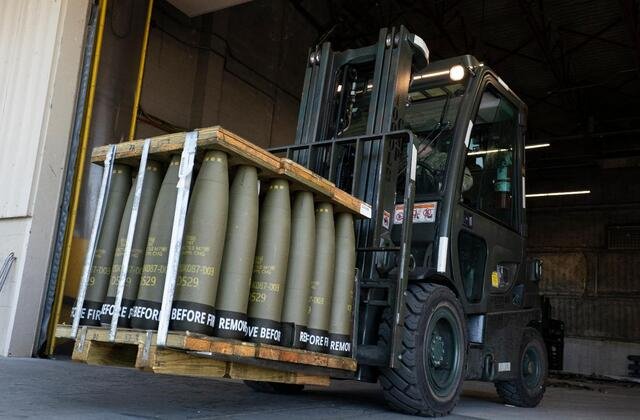
Countries Receiving the Largest Amounts of U.S. Foreign Aid
The United States allocates substantial funds in foreign assistance annually, with spending recently exceeding $70 billion for the first time in 70 years. This increase is largely due to heightened support for Israel and a significant boost in funding for Ukraine amidst its ongoing conflict with Russia.
The rise in foreign aid is not merely a result of inflation or gradual increases. In constant dollars, U.S. foreign aid jumped from $56.3 billion in 2021 to $70.4 billion in 2022, marking a more than 25% increase. This spike is notable compared to historical levels, with only a few years in the past (1947, 1949, and 1951) showing higher foreign aid expenditures.
In 1951, major recipients included France, Germany, Italy, the United Kingdom, and the Netherlands. In contrast, in 2022, Israel and Ukraine were the largest recipients of U.S. foreign aid.
Foreign aid encompasses various forms of assistance, including funds, goods, services, and technical support provided to foreign countries, international organizations, and other entities. This assistance is tracked by ForeignAssistance.gov, a site managed by the State Department and the U.S. Agency for International Development. However, this tracker does not capture all forms of aid, such as significant funding for Ukraine through mechanisms like the Ukraine Security Assistance Initiative.
Recent data shows that military aid’s share of total foreign aid decreased from 23% in 2020 to under 13% in 2021, the lowest since 1949. In 2022, it rebounded slightly to 14%. Conversely, economic assistance made up about 86% of aid obligations in 2022.
In 2022, Israel received approximately $3.3 billion in aid, predominantly military, while Ukraine received over $12 billion, surpassing Israel as the top recipient. Prior to Russia’s invasion, Ukraine ranked 21st in U.S. aid, with about $478 million in 2021.
Aid is typically allocated based on the recipient’s needs. Conflict zones often receive substantial military aid, while countries in Africa might receive more humanitarian and health-related assistance. For instance, in 2022, Ukraine, Israel, and Egypt were major recipients of military aid, whereas Ethiopia, Yemen, and Afghanistan received significant humanitarian assistance.
The U.S. is the largest donor of foreign aid by total dollar amount, but its aid as a percentage of Gross National Income (GNI) ranks lower compared to other OECD countries. Luxembourg, for example, contributed 1% of its GNI in development assistance, while the U.S. gave 0.22%, placing it 26th among donor countries.
In 2022, the largest recipients of U.S. foreign aid were:
1. Ukraine ($12.4 billion)
2. Israel ($3.3 billion)
3. Ethiopia ($2.2 billion)
4. Afghanistan ($1.39 billion)
5. Yemen ($1.38 billion)
6. Egypt ($1.37 billion)
7. Jordan ($1.19 billion)
8. Nigeria ($1.15 billion)
9. Somalia ($1.14 billion)
10. South Sudan ($1.12 billion)
The smallest recipients were:
1. North Korea ($264,000)
2. France ($25,000)
3. United Kingdom ($25,000)
4. Bhutan ($31,000)
5. Portugal ($48,000)
6. Norway ($53,000)
7. St. Kitts and Nevis ($65,000)
8. Sao Tome and Principe ($146,000)
9. Suriname ($193,000)
10. Tuvalu ($200,000)
Public opinion often overestimates the share of the federal budget allocated to foreign aid. Surveys suggest people believe it constitutes 26% of the federal budget, whereas it actually makes up less than 1% of federal spending.
The U.S. has distributed over $640 billion in foreign aid globally from 2012 to 2022. For context, the $70 billion in 2022 is slightly more than the budget of the Department of Housing and Urban Development but less than that of the Department of Homeland Security. Preliminary figures for 2023 suggest a potential decrease in foreign aid to about $45 billion, but this data is not yet complete.





Leave a Reply