Pentagon Defends Decision to Supply Cluster Bombs to Ukraine
The U.S. military has stated that it is considering sending cluster munitions to Ukraine but has not yet made a final decision. The Pentagon clarified its position on Thursday, addressing concerns about the potential civilian risks associated with these weapons.
Defense Department spokesman Air Force Brig. Gen. Pat Ryder confirmed that the Pentagon is evaluating whether to supply dual-purpose improved conventional munitions (DPICMs) to Ukraine but emphasized that no decision has been finalized. The Pentagon is committed to selecting variants with lower dud rates to minimize civilian harm.
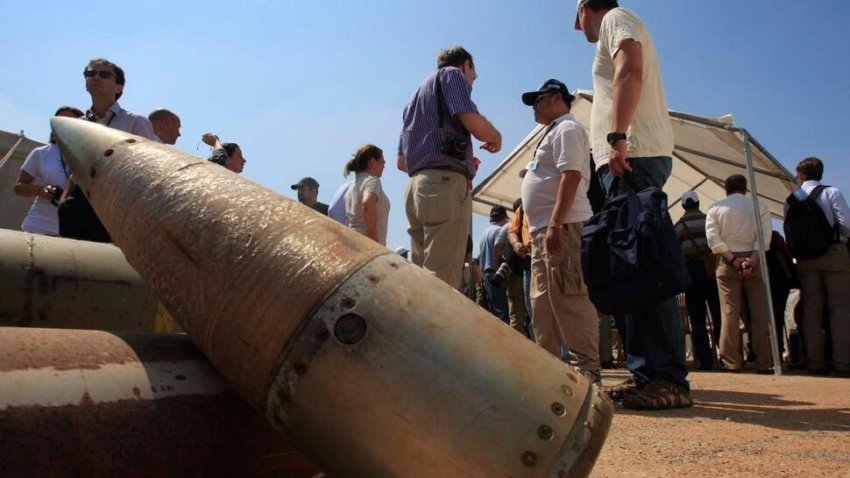
Cluster munitions are designed to disperse smaller explosives over a wide area, making them effective against armored vehicles and large troop concentrations. However, they also pose a risk of unexploded ordnance, which can endanger civilians long after the conflict. The U.S. is considering only newer DPICMs with a dud rate of less than 2.35%, significantly lower than older variants that have been criticized for higher dud rates.

Current U.S. policy allows the use of cluster munitions with dud rates above 1% in “extreme situations” to meet immediate warfighting needs. While over 100 countries have signed a U.N. convention banning cluster munitions, the U.S. and Russia are not among them. Ryder pointed out that Russia has used cluster munitions in Ukraine, often with high dud rates.
The Associated Press reported that the Biden administration may include cluster munitions in a new $800 million military aid package for Ukraine. Ukrainian officials have requested these munitions to support their counteroffensive efforts.
Historical data indicates that some cluster munitions have dud rates as high as 40%. However, U.S. officials assert that the munitions under consideration have a dud rate of less than 3% and are less likely to pose a long-term threat to civilians.
The Pentagon’s last large-scale use of cluster munitions occurred during the 2003 invasion of Iraq. Human Rights Watch has documented extensive use of these weapons in previous conflicts, including the 2001 invasion of Afghanistan.







Leave a Reply