History Shows That All Governments and Militaries Can Be Deceived, But There Are Tools to Help
Hamas’ devastating attack on Israel calls into question both intelligence lapses and realities of human nature.
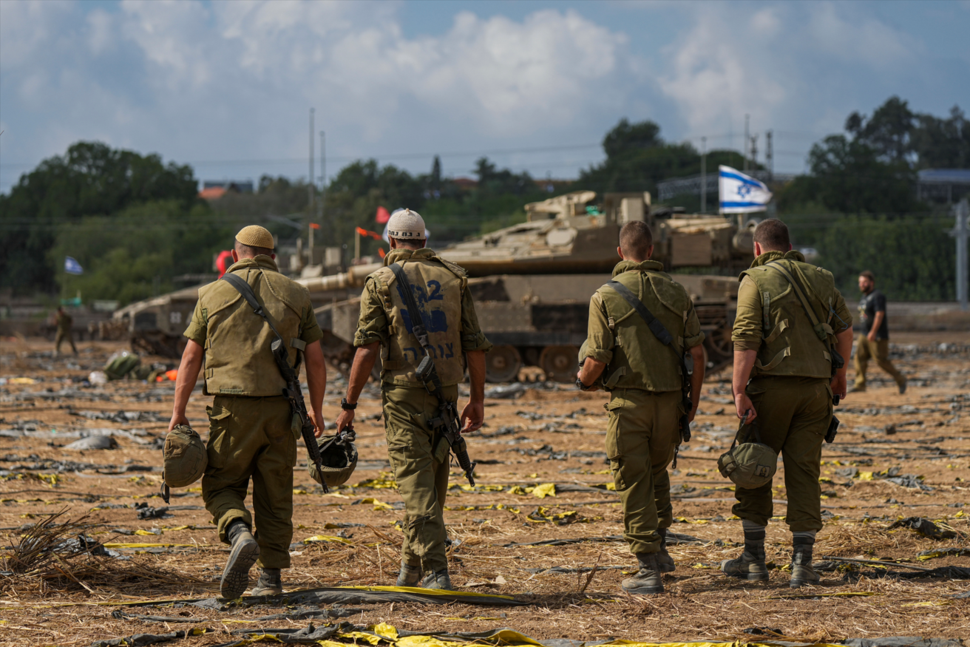
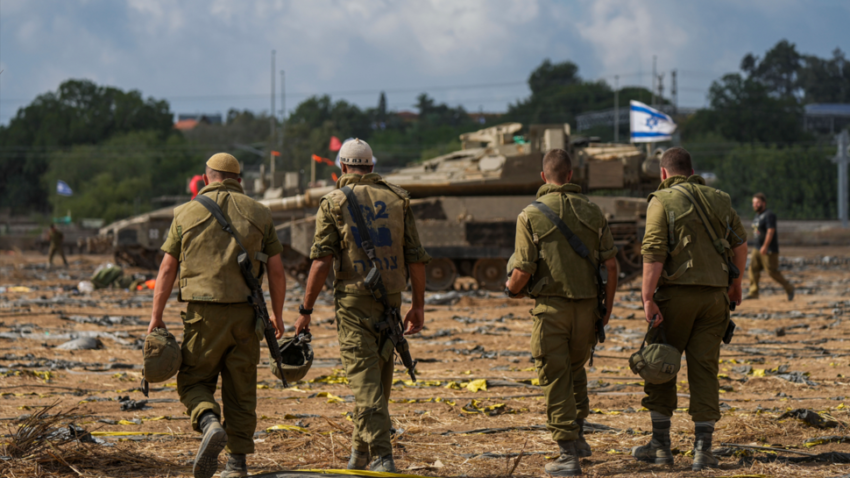
Israeli soldiers gather in a staging area near the border with Gaza Strip in southern Israel on Oct. 19, 2023.
Questions are swirling around the intelligence failure that left Israel unprepared for the horrific, barbaric Hamas terrorist attacks. The questions involve not only Israel’s vaunted security apparatus, but also the intelligence efforts of Israel’s allies and partners, including other nations in the region that want to stop the spread of Hamas and other Islamic fundamentalist terror groups. Israel, just like many other democracies, maintains intelligence cooperation with numerous nations, especially the United States. This explains why many are asking, “How did Israel and the U.S. miss what Hamas was planning?”
Q&A: How Did Israeli Intelligence Miss Hamas’ Preparations to Attack?
The inquiry into this will span several years. Military analysts and historians will propose hypotheses and identify shortcomings. Israel and its allies will implement measures to rectify these issues. But the question reflects a misunderstanding – not just of military, government and intelligence operations, but of humanity. And it harbors a crucial lesson for all of us: Everyone gets fooled sometimes. There are no exceptions.
In the days since this horror unfolded, many people are asking a question that still surprises me: “How is it possible that Israel missed this?” The question reflects a misunderstanding – not just of military, government and intelligence operations, but of humanity.
We’re already seeing millions of people around the world fall for Hamas’ lies and propaganda, widely distributed on the internet, in the wake of the horror it has inflicted on civilians in Israel. In just a few days, a tidal wave of misinformation flooded our devices. And just as all people can be fooled, so can all groups of people – including every nation’s military and intelligence apparatus. Terrorist groups know this, and they put it to use.
After then-British Prime Minister Margaret Thatcher escaped a hotel bombing by the Irish Republican Army in 1984, the IRA famously quipped, “Remember we only have to be lucky once. You will have to be lucky always.” History is filled with stories of just such “luck” for those planning horrific terrorist operations – and the blind spots their victims succumbed to.
Only after the 9/11 attacks were the gaping holes in intelligence and the secret preparations exposed publicly. The CIA’s Presidential Daily Brief just a month before the attacks warned, “Bin Laden Determined to Strike in U.S.” In 2008, after a Pakistani Islamic terrorist group killed scores of people in Mumbai, the New York Times declared India’s security forces to be “spectacularly unprepared.” They had failed to foresee the threat and engage in exercises for such a scenario.
America’s Bear Hug to Israel
To assist individuals, organizations, and government agencies in sustaining their vigilance against a wide array of threats, I provide three essential, practical lessons:
First, no matter how wary and on-the-alert people think they are, liars often exploit them by dangling exactly what they hunger for in front of them. These liars appeal to what their victims want to believe – whether it’s that they’ll get rich quick because a financial investment is a “sure thing,” that their security apparatus is so robust that it can’t be penetrated, or that their enemy has calmed down and is ready for peaceful coexistence.
This may explain why Reuters reported that, according to “a source close to Hamas,” the terror group “used an unprecedented intelligence tactic to mislead Israel over the last months, by giving a public impression that it was not willing to go into a fight or confrontation with Israel while preparing for this massive operation.” If this ruse turns out to be true, it would align closely with historical patterns.
Second, the higher the stakes, the bigger the blind spot. That’s because the more people have at risk, the more reluctant they are to want to believe that they could be wrong. This psychological phenomenon can result in costly miscalculations in critical situations.
And third, maintain intellectual humility at all times. Never believe you’ve outsmarted the enemy. Never grab one fact and invent a perfect narrative out of it. Instead, lean into contradictory details, assume blended threats (i.e. those that are multidimensional and not from one single source) and notice subtle shifts in the story. When liars sense overconfidence, they manipulate it.
Military entities can leverage these same human weaknesses to deceive their adversaries and fool their opponents. Gaza was the site of the so-called Haversack Ruse in 1917, when the British outwitted the Turks in what the Warfare History Network calls “one of the most effective stratagems in modern military history.” A staff officer pretended to be spotted by Turkish forces while on a reconnaissance mission and, apparently fleeing for his life, dropped his sack filled with what appeared to be intelligence documents – all of them fake. The British knew that the Turks would want to believe that their own sharp eyes and quick reactions led them to a real treasure trove. With the stakes so high, the Turks set aside the humility of asking whether they were falling for a trick.
Academia Must Condemn Hamas Attacks
There’s a reason the Trojan Horse incident from millennia ago remains such a common metaphor. It speaks to an eternal fact of humanity: No group is above or immune to deception.
Finding out if Israel fell for misinformation in this case is crucial; but being surprised that it could happen is problematic. We should all live knowing that it can happen to anyone at any time.
The natural human instinct to seek a sense of normalcy and safety not only leads people to ignore potential warning signs, it also prevents us from trying to think of new, stealthy ways that the enemy might be plotting against us. The 9/11 Commission itself notably cited a “failure of imagination” on the part of the U.S. government. When people feel relatively safe from certain threats, they become less likely to imagine scenarios that could pierce that sense of safety.
Perhaps one of the biggest challenges we face as we attempt to increase vigilance is learning to hold two contradictory stances at the same time: both belief and disbelief. Being “lucky always” requires us to take at face value the worst of what we’re told, while ferociously questioning it at the same time.
As Maya Angelou said, “When someone shows you who they are, believe them the first time.” We must let ourselves see people and groups for what they really are. This is especially true when it comes to terrorist groups. Hamas spent years slaughtering civilians and calling for the mass genocide of Jewish people. There was little reason to believe it was genuinely interested in avoiding attacks that would trigger a war.
But we also need to question every shred of information we’ve collected about them. That’s why we should add a second line to Angelou’s adage: “When you hear that they may be setting aside their evil activities, disbelieve it.”
Source: https://www.usnews.com/opinion/articles/2023-10-19/history-shows-that-all-governments-and-militaries-can-be-deceived-but-there-are-tools-to-help








Leave a Reply