3 Ways to Invest in Rare-Earth Stocks
Rare-earth miners, recyclers and funds offer investors exposure to these strategic materials.
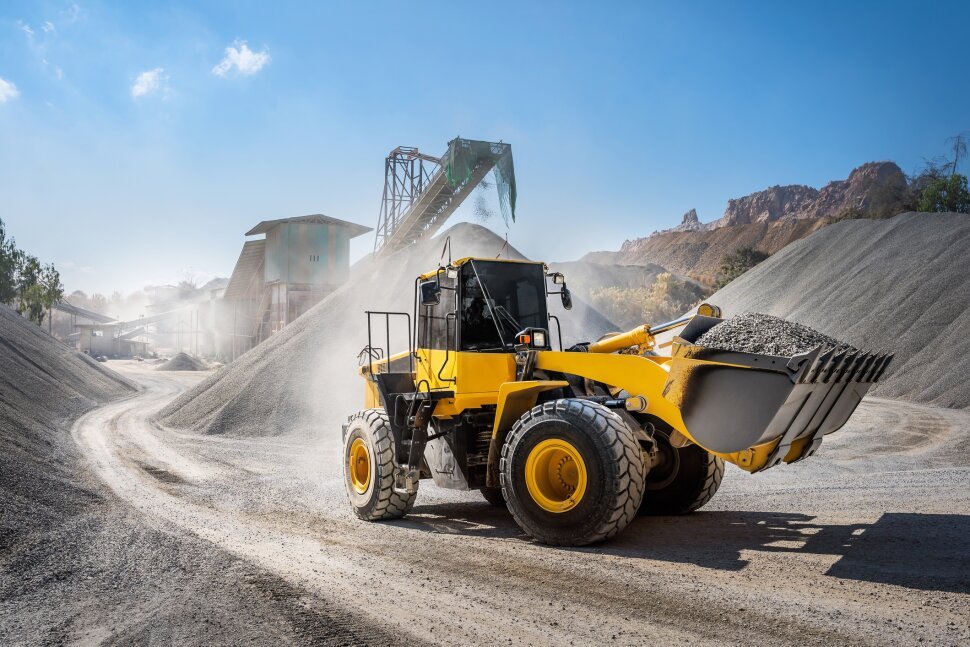
Rare-earth elements are typically found within other minerals, making mining an economic challenge.
An important thing to know about rare-earth elements is that they’re not rare. Rather, they are typically found within other minerals, making mining an economic challenge. These 17 elements are widely used in smartphones, flat-screen TVs and LED lights, and are relatively abundant in the earth’s crust. There are other uses for these elements: Yttrium and terbium, for example, have been used for laser targeting and weapons in combat vehicles.
The catch is that rare earths are not often found in concentrations that are economically viable and require a lot of refining to get them to usable purity levels. Plus, much of the mining and refining of rare earths has been outsourced to China, which controls most of the production, refining and manufacturing.
Sign up for stock news with our Invested newsletter.
Now, leaders in Washington and Europe are trying to reclaim a rare-earth supply chain outside of China, given the sometimes-strained nature of economic relations between them and the world’s second-largest economy. Signs point to stronger demand for companies involved in rare-earths production, refining and added-value manufacturing.
In addition to strategic value for military purposes, rare earths are used in wind turbines and electric vehicles, which makes these elements key to the transition from fossil fuels to a greener economy.
With that backdrop, here’s a guide to investing in rare-earth stocks along the supply chain:
Rare-Earth Mining Stocks
As the main supplier of rare earths, Chinese companies are at the forefront of the industry. Publicly traded ones include the China Northern Rare Earth Group High-Tech Co. Ltd. (ticker: 600111.SS), which mines the world’s biggest rare-earth deposit, located in the Inner Mongolia region. China Rare Earth Resources and Technology Co. Ltd. (000831.SZ), Rising Nonferrous Metals Share Co. Ltd. (600259.SS) and Xiamen Tungsten Co. Ltd. (600549.SS) are also involved in the rare-earth industry.
But without American depositary receipts, these stocks can be difficult for U.S. investors to access on an individual basis.
Rare-Earth Producers
Not so for MP Materials Corp. (MP), which is the only domestic company mining and processing rare-earth elements. The company operates the Mountain Pass mine in California. From the 1960s until the mid-1980s, that mine made the U.S. the world’s biggest producer of rare-earth elements.
The company recently began producing refined rare-earth products at Mountain Pass, a step the company says is a milestone for “returning the full rare-earth supply chain to the United States.”
But its most recent quarterly results are a reminder of how volatile investing in rare earths, or any commodity, can be. In the second quarter, MP Materials’ revenue dropped by more than half because of a 55% decrease in the price of rare-earth oxide.
In addition to being subject to the ups and downs in demand that economic cycles bring, rare-earth element pricing is also subject to China’s dominance of the industry’s supply.
Another company outside of China that mines rare earths is Lynas Rare Earths Ltd. (OTC: LYSCF), which extracts rare-earth elements from its high-grade mine in Australia and processes rare-earth minerals.
Like MP Materials, Lynas has backing from the U.S. Department of Defense, a sign of how eager Washington is to build up the supply of rare earths outside of China.
Lynas’ U.S. subsidiary is working on facilities in Texas that will process both light and heavy rare-earth elements – a designation based on where the elements fall on the periodic table. Recently, the company said the Defense Department raised its contribution for the heavy rare-earth component to about $258 million from $120 million. The Defense Department is also kicking in about $30 million in matching funds for a Lynas light rare-earths separation facility in Texas.
In Australia, a company called Iluka Resources Ltd. (OTC: ILKAF) is building the nation’s first fully integrated rare-earth refinery, which will be able to handle light and heavy rare-earth oxides.
“This provides customers with a new source of rare-earth products sourced directly from one producer operating as an independent market participant,” the company says.
Rare-Earth Mineral Exploration Companies
Beyond companies in production, there are smaller mining companies known as “juniors,” which are involved in rare-earth mineral exploration activities.
Some rare-earth exploration companies include Rare Element Resources Ltd. (OTC: REEMF), which has a mine in development in Wyoming; Texas Mineral Resources Corp. (TMRC), which is developing projects in Texas and Colorado; and Ucore Rare Metals Inc. (OTC: UURAF), which is working on a mine in Alaska. Defense Metals Corp. (OTC: DFMTF) is advancing its rare-earth element property in western Canada. Meanwhile, NioCorp Developments Ltd. (NB) is developing a Nebraska mine that will produce a rare-earth element as a byproduct.
Energy Fuels Inc. (UUUU), which currently produces uranium and vanadium, in February completed an acquisition of rare-earths mineral sands concessions in Brazil. But its rare-earth activities are currently based around refining, and it is working with Chemours Co. (CC) and Neo Performance Materials (OTC: NOPMF) on an ex-China rare-earth production and refining supply chain.
Rare-Earth Funds
Especially when dealing with small, opaque markets like those for rare-earth elements, investors might want to spread out the risk by owning multiple companies. After all, a lot of the risk of owning mining stocks is individual company risk – such as permitting headaches, cost overruns, ore bodies that don’t pan out as expected or poor management decisions, such as a botched acquisition.
Funds provide easy, one-stop shops, and thematic funds, such as those for rare-earth companies, have proliferated.
Last year, Australian firm Optica Capital launched Optica Rare Earths & Critical Materials ETF (CRIT). The fund holds companies involved in the mining, production, recycling, processing or refining of rare earths and critical materials. The fund has just $2.5 million in assets under management, limiting this investment’s liquidity and potentially making shares more difficult to buy and sell to convert to cash. So, you could get stuck with winning or losing positions for longer than you might like.
With an expense ratio of 0.85%, the fund is on the expensive side, as are many specialty themed funds. The fund is down 8.8% year to date as of Aug. 18.
The most popular rare-earth fund is the VanEck Rare Earth/Strategic Metals ETF (REMX), which has an expense ratio of 0.54%, has been around since 2010 and has amassed more than $560 million in assets under management. The fund is down 5.1% year to date.
A key difference in the funds is that the VanEck offering gives investors exposure to two of the Chinese rare-earth heavyweights – China Northern Rare Earth Group High-Tech and Xiamen Tungsten.
There is also the Dolefin Rare Earth Elements Fund, a Swiss mutual fund that invests in shares of rare-earth elements companies. But this fund isn’t available to U.S. citizens.
Rare-Earth Recycling Companies
Supplying rare-earth elements doesn’t just mean digging them out of the ground. Research firm MarketsandMarkets estimates the global rare-earth metals recycling market will hit $422 million by 2026, up from $248 million in 2021 amid increasing demand for clean energy and the need for steady sources of rare-earth metals.
American Resources Corp. (AREC) isolates and purifies rare-earth magnet metals from end-of-life permanent magnets from wind turbines and electric vehicles.
Geomega Resources Inc. (OTC: GOMRF) is building a sustainable rare-earths recycling facility to convert magnet production waste and end-of-life magnets into products usable by the renewable energy and electric vehicle industries. The company also owns a rare-earth deposit in eastern Canada.
Mkango Resources Ltd. (OTC: MKNGF) is developing a rare-earth project in Malawi and has a 90% interest in green technology incubator Maginito Ltd., which recently increased its ownership of U.K. rare-earth magnet recycler HyProMag from 42% to 100%.
In May, when the HyProMag deal was announced, Mkango CEO William Dawes said the recycler’s development has come “against the backdrop of growing interest in recycling and sustainable rare-earth supply chains.”







Leave a Reply