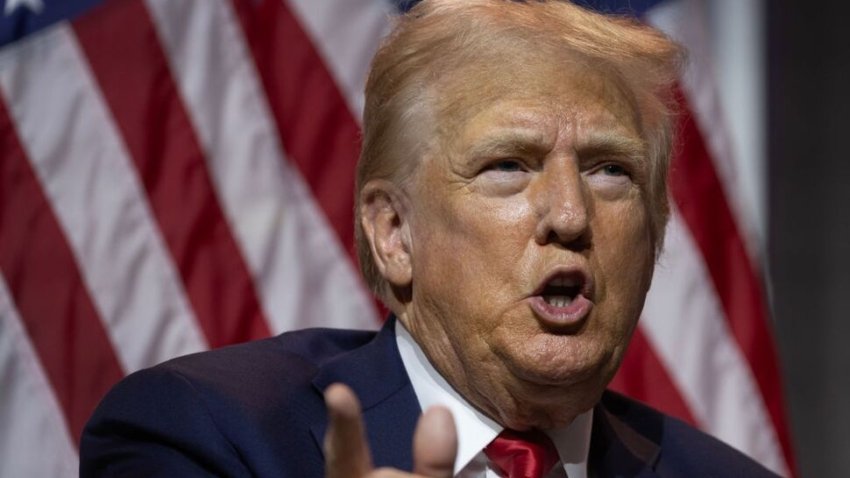
How Trump’s Interview With Black Journalists Went Off the Rails
The former president had a significant chance to connect with a key constituency he has been trying to reach. However, the interview resulted in a series of controversial statements and responses that raised concerns and confusion among observers.
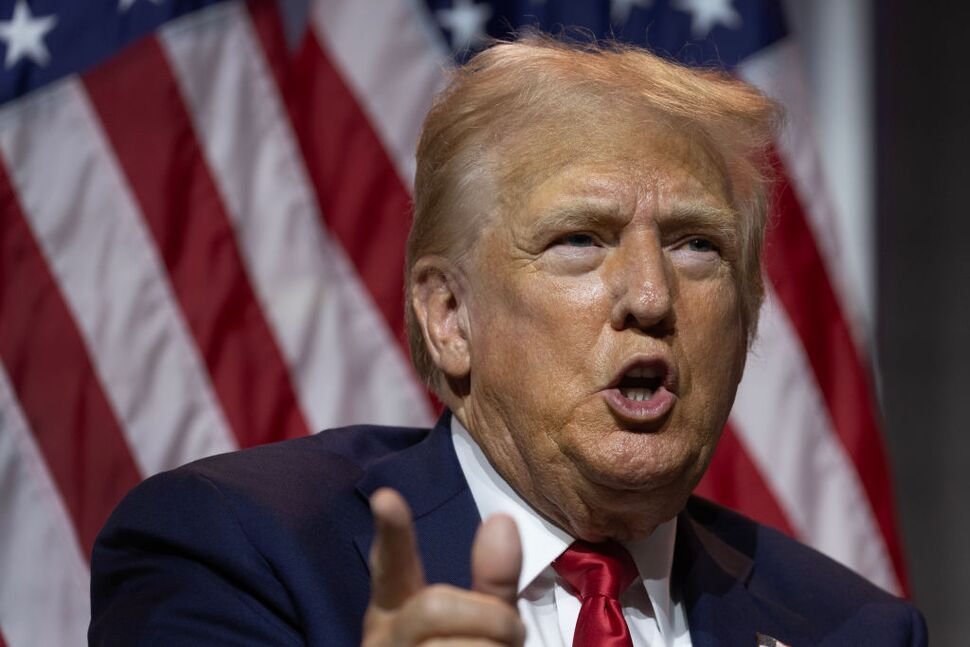
Former President Donald Trump made controversial statements during his appearance at the National Association of Black Journalists’ annual convention, a key opportunity to appeal to Black voters. During the event, which was moderated by ABC News congressional correspondent Rachel Scott, Fox News anchor Harris Faulkner, and Semafor political reporter Kadia Goba, Trump made a series of remarks that drew criticism.
The discussion began with Scott reading Trump’s past comments about Black women journalists, which led to a tense exchange. Trump dismissed the questioning as “disgraceful,” criticized the event’s sound quality, and made broad claims about his contributions to the Black community. He claimed credit for increasing employment and providing financial support to historically Black colleges and universities, stating, “I have been the best president for the Black population since Abraham Lincoln,” a statement that has been widely debated.
Trump also made a contentious comment about Vice President Kamala Harris, saying he only recently recognized her as Black, implying that her racial identity had changed over time. This remark was met with widespread criticism.
When discussing his policies, Trump reiterated his focus on job creation and immigration, using a phrase from his previous debates: “Black jobs.” He argued that immigrants are taking jobs from Black Americans, a point that has been criticized for its lack of nuance and potential to inflame racial tensions.
Former President Donald Trump stated that, if elected, he would take immediate action to address inflation by closing the border and increasing domestic oil production. He suggested that boosting domestic oil production could help lower inflation by reducing the costs of goods and services, as oil prices impact many aspects of the economy.
Trump also addressed comments made by his running mate, Senator JD Vance of Ohio, who had criticized women without children and implied they should have lesser representation. Trump described Vance’s remarks as reflecting his “family-oriented” perspective and stated that he believes it is acceptable for people to choose not to have families.
Trump’s appearance at the National Association of Black Journalists’ (NABJ) convention received some backlash, including from members of the association. Ken Lemon, the NABJ president, defended the decision to invite Trump, noting that it was consistent with the organization’s practice of providing members the opportunity to hear from various candidates and hold them accountable. Lemon clarified that the invitation did not equate to an endorsement.
The Harris campaign criticized the invitation, pointing out Trump’s history of derogatory remarks about the media and his opposition to press freedoms. Jasmine Harris, Black media director for the Harris campaign, emphasized Trump’s antagonistic stance towards the media and questioned his participation in the event.
The presumptive Democratic nominee, Vice President Kamala Harris, was not present at the convention. Lemon stated that the NABJ had extended an invitation to Harris but was informed that her schedule could not accommodate the request. The group is still discussing potential virtual options with her campaign.
Recent surveys suggest that Harris is making progress with key voter demographics. According to a Wall Street Journal poll from late July, Harris is supported by 63% of nonwhite voters in a hypothetical match-up against Trump. This is an increase from the 51% support for President Biden among nonwhite voters in previous surveys, though still below the 73% Biden received in 2020 exit polls.







Leave a Reply