A Fresh Foreign Policy Test for Biden – and Harris – in Venezuela
The crisis in the Latin American country is unrelated to the war in Gaza. However, it is anticipated that external pressures on the situation may increase.
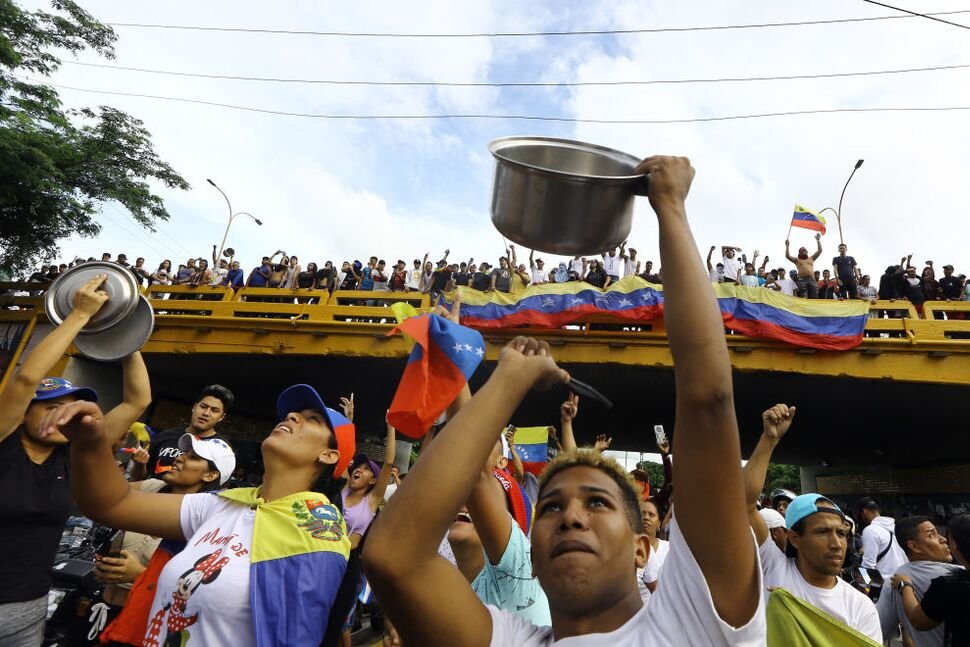
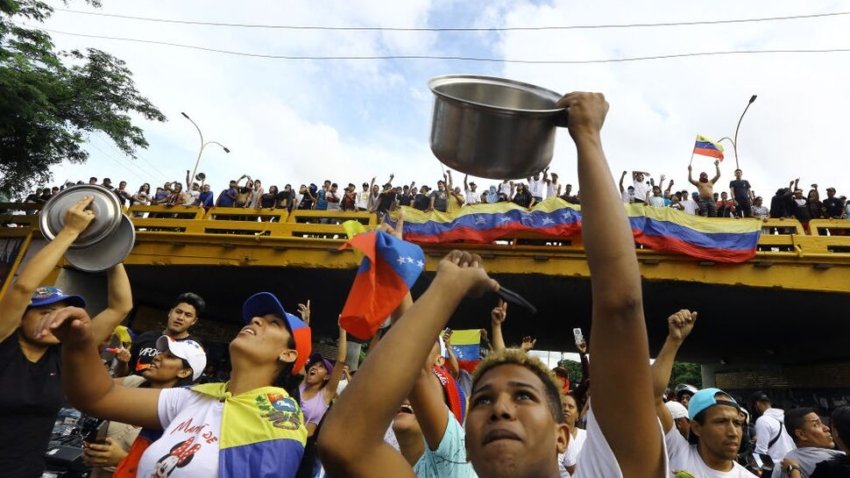
President Joe Biden is now facing a significant international issue involving Venezuela, where deadly protests have erupted following socialist leader Nicolás Maduro’s claim of victory in the recent election. Maduro announced he won with 51% of the vote, but detailed results have not been released, leading to widespread skepticism.
International pressure on Maduro has intensified, with concerns about electoral fraud raised by the Biden administration, the G7 countries, the Organization of American States, independent pollsters, and many Latin American neighbors. Reports indicate that opposition sources claim their tallies show Edmundo Gonzalez, the opposition candidate, with more than twice the votes of Maduro.
On Tuesday, Biden, who had previously negotiated a deal to ease pressure on Maduro in exchange for electoral concessions, spoke with Brazilian President Luiz Inácio Lula da Silva. Lula described the situation as “normal” and “calm,” and both leaders emphasized the importance of Venezuela releasing complete vote tallies from polling stations.
Maduro announced on Wednesday that he had requested an audit of the election by Venezuela’s high court, which is closely associated with his government, and stated that all electoral tally sheets would be made available. In response to the election results, Venezuela severed diplomatic ties with seven Latin American countries, including Argentina, Chile, and Peru. Peru, which recognizes Gonzalez as president-elect, expelled Venezuelan diplomats in reaction to Maduro’s claimed victory.

Context on the Crisis
The unrest in Venezuela has deep historical roots linked to the country’s politics and its oil-dependent economy. Maduro succeeded President Hugo Chávez, who was known for his anti-U.S. stance and strong personality. Chávez’s presidency, which ended with his death in 2013, left behind a legacy of weakened democratic institutions and increasing violence. This turmoil has contributed to a massive exodus, with millions of Venezuelans fleeing to neighboring countries and beyond, including the U.S.
The U.S. has long criticized Venezuela for insufficient efforts to combat drug trafficking and human trafficking and for not fully cooperating with global counterterrorism initiatives. U.S. sanctions have targeted Venezuela’s oil sector, exacerbating the country’s economic challenges.
Political Implications for the U.S.
While the crisis in Venezuela is significant, it does not have the same political impact in the U.S. as the situation in Gaza. U.S. interests are affected, particularly through oil prices, as disruptions can lead to higher gas prices due to reduced supply.
Before the recent unrest, about 7.7 million Venezuelans had already left their homes, creating what experts call the world’s largest displacement crisis. Venezuelans briefly surpassed Mexicans as the largest nationality arrested for illegally crossing the U.S. border in September.
Unlike the divisive nature of the Gaza conflict within the Democratic Party, Venezuela does not polarize U.S. voters to the same extent. Vice President Kamala Harris, the likely Democratic nominee, has been more vocal about Palestinian issues compared to President Biden, and this dynamic influences her political strategy.
While Biden’s administration is under pressure to address the situation in Venezuela more forcefully, including potential new sanctions, officials have indicated that it is too soon to discuss additional measures. National Security Council spokesman John Kirby remarked that patience is waning as the international community awaits a full release of the election data.





Leave a Reply