Chechen Forces Loyal to Putin Have Yet to Appear on the Battlefield as Anticipated Following Prigozhin’s Rebellion
Chechen Forces Loyal to Putin Have Yet to Appear on the Battlefield as Expected After Prigozhin’s Rebellion
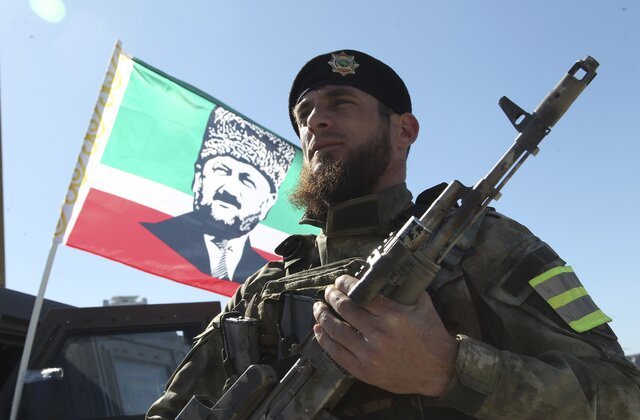
In mid-June, it was anticipated that elite Chechen military units would step in to handle significant operations in Ukraine following the turmoil caused by Yevgeny Prigozhin’s rebellion. Chechen leader Ramzan Kadyrov had been publicly critical of Prigozhin and supportive of President Vladimir Putin. With Prigozhin’s forces in disarray after their failed attempt to march on Moscow, it seemed logical that Kadyrov’s troops would take on key roles.
However, a month later, these expectations have not been met. Chechen forces, particularly the Akhmat unit, have not been prominently involved in major operations in Ukraine, despite the anticipated spring offensive by Kyiv and Russia’s need to replace Wagner Group troops in key positions.
Several U.S. and Ukrainian officials suggest that the Chechen units are either avoiding combat or are not well-prepared for effective engagement. A Ukrainian army officer described them as “TikTok troops” who focus more on documenting their activities rather than participating in meaningful combat.
The Chechen forces appear to be more involved in managing internal issues within the Russian military rather than engaging in direct conflict. “The ‘Akhmat’ unit seems to act as a blocking detachment, preventing Russian regular troops from retreating, rather than seeking out combat,” the officer noted.
Putin’s reliance on paramilitary groups began early in the war due to failures within the Russian Ministry of Defense. The Wagner Group and Akhmat units played significant roles in battles such as Bakhmut and Mariupol. However, Kadyrov’s influence appeared to wane after Mariupol, and his alliance with Prigozhin faltered as Prigozhin’s public criticism of Russian military leaders intensified.
Despite expectations that Kadyrov’s forces would fill the void left by Wagner, these plans seem to have faltered due to ongoing dysfunction and confusion within Russian military command. Colin Clarke, a senior research fellow at The Soufan Center, expressed surprise that Kadyrov’s troops have not been more active, attributing the delay to the disarray following Prigozhin’s rebellion.
The current status of Prigozhin remains unclear, and while Putin has labeled him a traitor, there is speculation about his whereabouts. Kadyrov’s forces might not be sufficiently equipped or trained to replace Wagner’s positions, and there are concerns that they may be avoiding combat to prevent high casualties.
U.S. military leaders have noted that the overall effectiveness of the Russian military has been compromised due to the Prigozhin incident and high casualties among officers. Pentagon spokesman Air Force Brig. Gen. Pat Ryder confirmed that Wagner troops are no longer active in Ukraine but had no information on the Chechen forces.
Private analysts also agree that Kadyrov’s forces have not significantly contributed to Russia’s military objectives. Kateryna Stepanenko of the Institute for the Study of War observed that while Chechen units have been involved in some defensive actions, they have not achieved any notable gains and are often avoiding direct combat.
In contrast, Chechen fighters aligned with Ukraine have been effective in their operations. Recent reports reveal that these pro-Ukrainian Chechen forces have successfully targeted Russian logistics convoys, highlighting a complex internal conflict among Chechen factions, with some fighting against Russian invaders and others working for Kadyrov.
This ongoing internal Chechen struggle reflects broader conflicts within the Russian and Chechen spheres of influence, with significant implications for the current war dynamics.



Leave a Reply