Former Military Pilots and Intelligence Officials Warn That UFOs Pose a Significant Threat to U.S. National Security
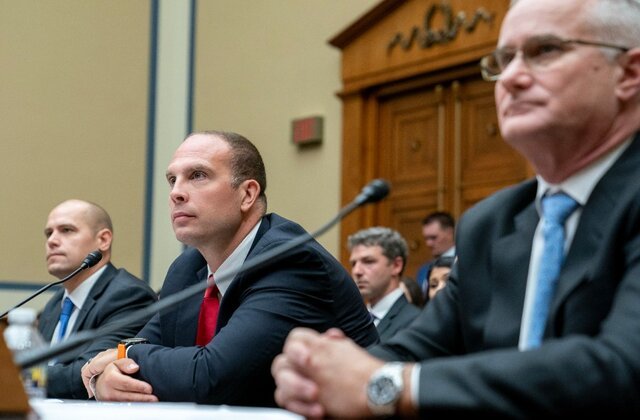
In a recent congressional hearing, former military and intelligence officials discussed their concerns about the potential national security risks posed by unidentified aerial phenomena (UAPs), commonly known as UFOs.
Navy Commander David Fravor, a retired F/A-18 pilot, testified about a 2004 encounter he and his team experienced with a UAP off the coast of California. He described seeing a 40-foot object, resembling a Tic-Tac candy, perform maneuvers that were beyond the capabilities of known technology. Fravor emphasized that this encounter has not been formally investigated and expressed surprise that such an experience would now be the subject of serious government scrutiny.
Fravor described the object’s technology as “far superior” to anything currently available and speculated on its potential capabilities, including space travel and rapid maneuvering. Despite his detailed account, he acknowledged the limitations of current U.S. military systems in defending against such advanced technology.
During the hearing, another former Navy pilot, Ryan Graves, highlighted the importance of identifying unknown aircraft for national security. He warned that ignoring unidentified targets could create vulnerabilities that adversaries might exploit.
David Grusch, a former intelligence officer and self-proclaimed whistleblower, added that he had seen evidence of non-human biological remains from UAP crash sites investigated by the U.S. government. He declined to provide specific details in the open session but agreed with other witnesses that UAPs have shown interest in U.S. nuclear facilities and that current defense systems are inadequate.
Despite the high profile of the hearing, some experts and enthusiasts were disappointed by the lack of new, substantive information. Clas Svahn, chairman of the Sweden-based Archives for the Unexplained, criticized the congressional panel for not pressing harder for details and for failing to address the thoroughness of UAP investigations.
Fravor expressed frustration that the incident he reported was never formally investigated and noted that while the stigma around discussing UAPs has decreased, more transparency is needed. The Pentagon has yet to respond to inquiries about the hearing.
The hearing marked a significant shift in how the U.S. government approaches the topic of UAPs, reflecting growing openness to discussing and investigating these phenomena.





Leave a Reply